Predictive Maintenance Software (PdM) for CMMS
Predictive Maintenance (PdM) is a condition-based maintenance strategy built into eWorkOrders CMMS that monitors equipment performance using sensor data, meter readings, and asset history — automatically triggering work orders and alerts when assets show early signs of failure, so your team can act before a breakdown occurs.
eWorkOrders lets you define equipment operating boundaries, import and graph sensor readings, and automatically generate a work order and email alert the moment an asset drifts outside those parameters. Sensor integrations, meter-based triggers, trend analysis, and remote monitoring all connect directly to the same work order and asset history platform your team already uses every day.
Stop waiting for equipment to break. Catch the warning signs while there’s still time to plan the repair.
Customers Love Us!















How eWorkOrders Predictive Maintenance Works
Define boundaries. Import readings. Graph trends. Auto-generate work orders. All inside the CMMS your team already runs on.

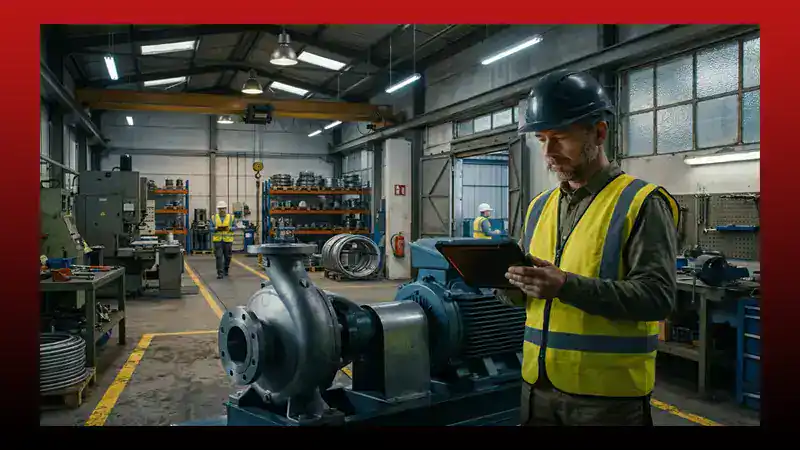
Set the Operating Limit. eWorkOrders Creates the Work Order When the Threshold Is Exceeded.
You define the acceptable operating range for each monitored asset — temperature, vibration, pressure, current draw, runtime hours, or any parameter you track. When an imported reading falls outside that range, eWorkOrders creates a work order, assigns it to the right technician, and sends an email alert. The work order response, parts, labor, and findings write to the asset’s maintenance history on close.
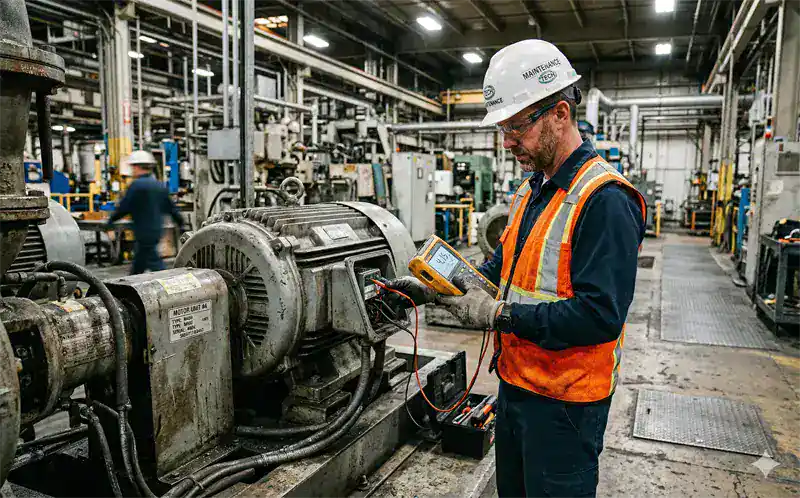
Import Readings. eWorkOrders Graphs the Trend and Generates the Work Order When the Limit Is Exceeded.
You import meter readings for any parameter — vibration, temperature, pressure, runtime hours, cycles, current draw, or flow rate. eWorkOrders plots those readings as a trend graph on each asset record so deterioration is visible before the limit is exceeded. When the limit is exceeded, the work order is generated and assigned automatically. Technicians enter readings manually or they feed in via API from connected systems.
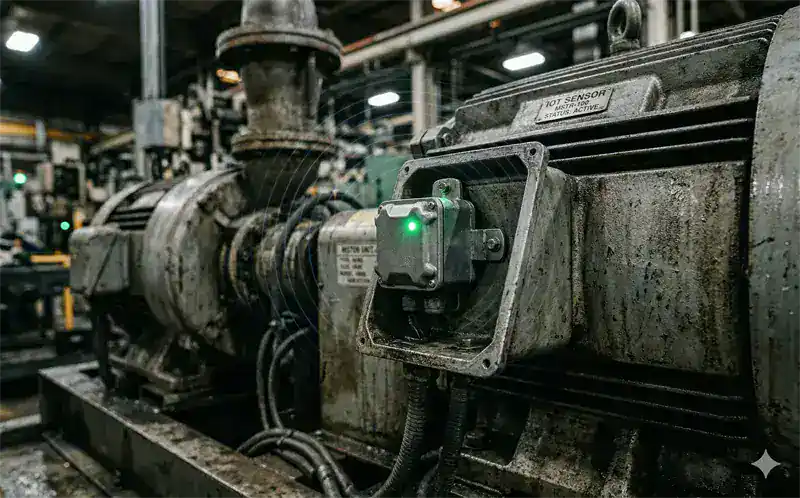
Sensor Data Comes In via API. Out-of-Range Readings Generate Work Orders Automatically.
IoT sensors transmit equipment data wirelessly to your condition monitoring platform. eWorkOrders receives that data via API, compares it against your asset thresholds, and generates a work order if a reading is out of range. The assigned technician gets an email alert. The job is tracked and closed like any other work order in the system.
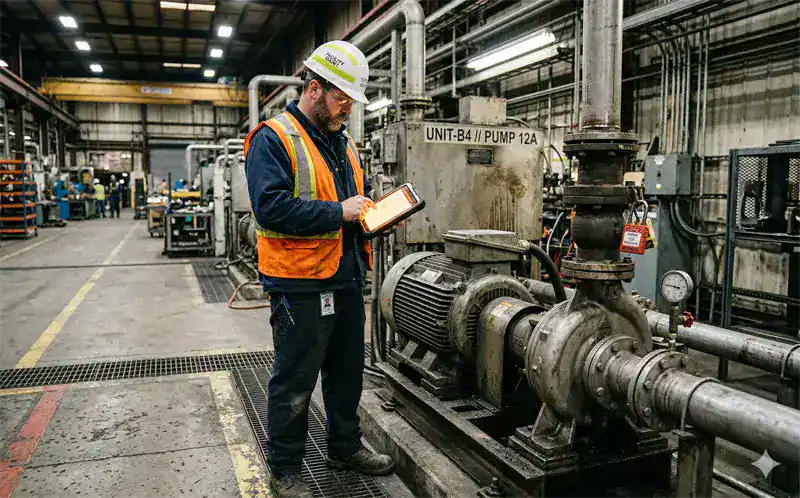
Technicians Arrive at the Equipment With the Work Order, Asset History, and Parts List Already on Their Phone.
When the threshold is exceeded, the assigned technician receives an email alert with the work order. The eWorkOrders mobile app shows the triggering condition, full asset maintenance history, current meter readings, parts list, and attached OEM documentation. They complete the checklist, log parts — inventory updates automatically — record labor, take photos, and enter findings. On close, a digital signature is captured and a timestamped compliance record is written to the asset history.
What Is Predictive Maintenance — and How Does It Differ from Preventive?
Predictive maintenance (PdM) monitors the actual performance and condition of equipment during normal operation to detect deterioration before failure occurs. It depends on condition monitoring — collecting and analyzing real data from equipment so maintenance is scheduled based on what the equipment is actually telling you, not a calendar.
PdM vs. Preventive Maintenance. Preventive maintenance runs on a fixed schedule regardless of actual equipment condition. Predictive maintenance acts when sensor data or meter readings signal a problem is developing. PdM is not a replacement for PM — most programs use both. PMs cover routine scheduled work; PdM covers critical assets where the cost of unexpected failure justifies condition monitoring.
When is PdM the right choice? It is most practical for critical equipment where a short unplanned outage causes significant production, safety, or financial impact — motors, compressors, pumps, cooling systems, turbines, and rotating machinery with predictable failure modes. It is not cost-effective for non-critical or inexpensive-to-replace assets.
Why your CMMS is the foundation for PdM. All the asset performance data already in eWorkOrders — work orders, PM completions, failure events, meter readings — is the starting dataset for your PdM program. That history establishes what normal looks like for each asset and identifies recurring failure patterns. Condition monitoring detects the problem; eWorkOrders turns that detection into an assigned work order with the right context.[1,2]
See eWorkOrders Predictive Maintenance in Action — Live Demo, No Commitment
Our US-based team will walk through threshold configuration, sensor integration, meter triggers, and condition monitoring workflows built around your specific equipment.
What Predictive Maintenance Monitors — and How
PdM sensors are IoT-enabled devices that collect real-time data from equipment to detect early signs of failure. Here is what they monitor and the techniques used to analyze it.
| Monitoring Technique | What It Detects | Common Equipment & Use Cases |
|---|---|---|
| Vibration AnalysisDynamic Monitoring | Most Common Imbalance, misalignment, bearing wear, looseness | Motors, pumps, fans, conveyors, compressors. Accelerometers detect fault signatures in rotating machinery. Covers roughly 80% of rotating equipment failure modes. Data fed into eWorkOrders via connected platforms like AssetWatch and Sensoteq. |
| Infrared ThermographyTemperature Measurement | Overheating components, insulation breakdown, electrical faults | Electrical panels, motors, bearings, HVAC systems. Infrared cameras capture thermal images identifying hotspots. Temperature readings can be imported as meter readings in eWorkOrders with defined alert thresholds. |
| Ultrasonic MonitoringAcoustic Analysis | Leaks, cavitation, gear faults, lubrication issues, arcing | Valves, bearings, compressed air systems, electrical panels. High-frequency sound waves detect problems inaudible to the human ear — early fault detection before visible damage. |
| Oil & Lubrication AnalysisTribology | Contamination, metal particles, degradation, wear indicators | Engines, gearboxes, hydraulic systems, compressors. Oil samples analyzed for contaminants. Results imported as meter readings in eWorkOrders — oil quality levels trigger PM work orders automatically. |
| Pressure MonitoringFluid / Gas Systems | Leaks, blockages, pump degradation, hydraulic failures | Pipelines, compressors, hydraulic systems, pneumatic equipment. Pressure sensors feed readings into eWorkOrders. Threshold breaches auto-generate work orders. |
| Motor Circuit AnalysisElectrical Testing | Insulation breakdown, rotor faults, early electrical failure | Electric motors across all industries. Computerized testing evaluates motor condition without shutdown. Findings logged to asset record — history builds repair-vs-replace intelligence. |
| Energy & Current MonitoringPower Analysis | Inefficiencies, overloads, failing motors, unexpected draw spikes | Motors, HVAC, pumps, production equipment. Current and power draw tracked as meter readings. Unexpected consumption changes flag developing faults before thermal or vibration symptoms appear. |
| Flow Rate MonitoringProcess Industries | Restrictions, leaks, pump degradation in fluid systems | Water treatment, chemical processing, oil & gas, food & beverage. Flow deviations from normal range imported as meter readings — trigger PM or inspection work orders automatically. |
Start with vibration and temperature — they cover the majority of rotating equipment faults.
Most organizations begin their PdM program with vibration analysis and infrared thermography, as these two techniques address roughly 80% of rotating machinery failure modes. eWorkOrders supports any measurable parameter — you can expand to additional monitoring inputs as your program matures, and all data feeds into the same asset history and work order platform.
Every Predictive Maintenance Capability Your Team Needs
From threshold configuration and sensor integration to AI-assisted pattern analysis and mobile response — one connected platform handles the full PdM workflow.
Connect to AssetWatch, Augury, DiagRAMS, Sensoteq, MachineMetrics, ReliaSol, AccuPredict, and other condition monitoring platforms via API. Live sensor data flows directly into work order triggers and asset records — closing the gap between alert and action.
Import readings for any parameter — vibration, temperature, pressure, runtime hours, cycles, current draw. Readings are graphed over time so trends are visible before thresholds are crossed. Manual entry or automatic API feed — both trigger the same work order logic.
Define operating boundaries per asset. When a reading exceeds the limit, eWorkOrders auto-generates a work order and sends an email alert — pre-populated with the asset record, triggering condition, parts list, and assigned technician. Nothing needs to be created manually.
MTBF, MTTR, asset availability, alert-to-resolution time, condition-based work cost per asset, and PM compliance — all calculated automatically from real work order and sensor data. Filter by asset, site, date range, or technician. Export data for analysis or audits.
Analyzes historical work order, meter, and failure data to identify recurring failure patterns per asset. Suggests adjusted maintenance intervals based on actual MTBF history. Flags assets with deteriorating performance trends before the next failure cycle hits.
Technicians get text or email alerts with the full work order on their phone the moment a threshold is crossed. At the asset, they have complete history, OEM docs, parts list, and the triggering condition data. All field data logs to asset history in real time — iOS and Android.
Every condition-based event — alert, response, findings, parts, labor, signature — is permanently stored on the asset record. All historical CMMS data becomes the foundation your PdM program builds from. History from day one is your first PdM dataset.
Every closed condition-based work event creates a timestamped record — who responded, what triggered the alert, findings, parts, labor, photos, and digital signature. Supports FDA, OSHA, ISO, HACCP, and JCAHO without manual documentation assembly before audits.
Most programs work best with calendar-based PMs for routine coverage and condition-based PdM for critical assets. eWorkOrders supports both in the same system — no separate tools, no data silos, no reconciliation between two platforms.
Scan a QR code on the asset to instantly open the condition alert, full maintenance history, and work order on mobile. No manual lookup. Especially useful when responding to unexpected alerts on unfamiliar equipment across multiple sites.
When a threshold alert fires, the parts commonly needed for that failure mode are already visible inside the auto-generated work order. Reorder alerts fire before stock depletes — parts are on hand when condition-based repairs are needed, not ordered in a panic.
Every hour spent responding to a condition alert is attributed to the asset automatically. True cost-of-ownership builds over time — giving operations leaders the data to justify maintenance budgets and identify when a monitored asset is costing more to repair than to replace.
The 6 Stages of Predictive Maintenance in eWorkOrders
From defining what normal looks like on day one to the history update that informs your next decision — every stage runs inside one platform.
Each monitored asset is configured in eWorkOrders with its normal operating parameters — acceptable ranges for vibration, temperature, pressure, runtime hours, or any measurable condition. Alert thresholds are set based on OEM specifications, engineering judgment, or historical failure data. Sensor integration platforms are connected via API. From this point forward, monitoring runs automatically — no one needs to manually check readings or dashboards.
Sensor data flows from connected monitoring platforms into eWorkOrders via API, or technicians log meter readings during routine rounds. Both approaches feed the same threshold logic. Readings are graphed over time on the asset record — so deterioration becomes visible before the limit is exceeded.
When a reading exceeds the defined limit, eWorkOrders automatically generates a work order tied to that asset. The work order is pre-populated with the alert detail, the asset’s full profile and maintenance history, the parts list for that failure mode, and the assigned technician. An email alert goes to the technician immediately. No one needs to manually create the job, find the asset record, or decide who to assign it to.
The technician arrives at the asset with complete context on their mobile device — the triggering condition, full maintenance history, OEM documents, current meter readings, and the parts list. They step through the required checklist, pull parts (inventory updates automatically), log actual labor time, capture photos, and document all findings. Required fields enforce that nothing is skipped before the work order can close — ensuring the record is complete every time.
The supervisor reviews the completed work event — verifying findings documented, parts consumed, labor recorded, and checklist completed. Digital signature capture records the approval with a timestamp, creating a signed, auditable record of the response to that condition event. For regulated industries, this satisfies FDA, OSHA, ISO, HACCP, and JCAHO requirements without additional paperwork or pre-audit assembly.
The work order closes and the asset record updates immediately. MTBF, MTTR, total condition-based maintenance cost, and alert-to-resolution time recalculate on your PdM dashboard automatically. The AI Work Order Assistant (Enterprise) logs the event to its failure pattern model — adjusting interval recommendations based on accumulated real data. Every closed work order adds to the history that informs your next maintenance decision.
Why Maintenance Teams Choose eWorkOrders for Predictive Maintenance
PdM built into your CMMS — not bolted on as a separate tool. Independent, US-based, and built for maintenance teams since 1995.
Predictive maintenance, preventive maintenance, work order management, parts inventory, and compliance documentation are all in the same system. No separate monitoring tool disconnected from your work order data. Starter ($380/mo) and Advanced ($480/mo) plans include unlimited technicians. See all plans →
All the asset performance data already stored in your eWorkOrders CMMS — work orders, PM completions, failure events, meter readings — becomes the initial dataset for your PdM program before you even connect a sensor. That history establishes baselines, identifies failure patterns, and makes your threshold decisions more accurate from day one.
MTBF, MTTR, asset availability, condition-based work costs, alert-to-resolution time, and PM vs. PdM work split — all calculated automatically from real data. Visible on the dashboard in real time. Filter by site, asset type, or date range. Export for analysis. No spreadsheets, no manual work.
Founded 1995. Purpose-built for maintenance and asset management teams. 120+ industry awards. 4.9 stars on Capterra, G2, and GetApp. Independent — every product decision is driven by what makes the platform more useful for the maintenance managers who rely on it daily.
When your team needs help configuring a sensor integration, setting up a meter trigger, or understanding why a threshold alert was generated, you call a person who picks up. Our support team responds within hours and understands maintenance operations context — not just software tickets.
SSO, role-based permissions, complete audit trails, and one of the highest security scores in the CMMS industry. Your sensor data, asset history, and condition-based maintenance records are protected to the same standard required by regulated industries.
Common Predictive Maintenance Challenges — and How eWorkOrders Solves Them
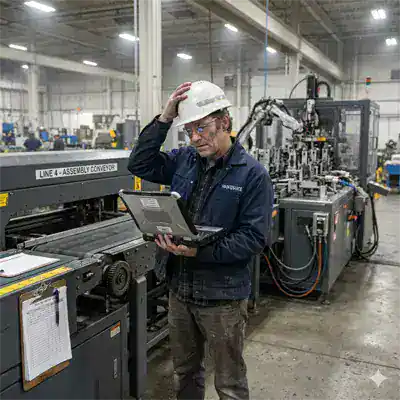
Most organizations trying to implement PdM hit the same set of problems — sensor data that doesn’t connect to work orders, monitoring tools that generate alerts nobody follows up on, and asset history sitting in one system while the CMMS lives in another. The underlying issue is always the same: detection without action. eWorkOrders is built to close that gap. According to the Deloitte Analytics Institute, predictive maintenance reduces equipment breakdowns by an average of 70%, lowers maintenance costs by 25%, and increases productivity by 25% — but only when the monitoring data is connected to the system your team actually works in.[1]
Sensor Data That Never Reaches the Work Order System
Most teams using condition monitoring have a fundamental problem: the sensor alerts live in one system and work order management lives in another. Nothing connects them automatically, so alerts get ignored or manually transcribed hours later. eWorkOrders closes this gap — sensor data flows in via API and auto-generates a work order in real time.
Integrates with AssetWatch, Augury, DiagRAMS, Sensoteq, MachineMetrics, ReliaSol, AccuPredict, and more via API.
Maintenance Intervals Set by OEM Defaults, Not Actual Equipment Behavior
OEM-recommended intervals are written for average use in average conditions. Your equipment probably doesn’t match that profile. eWorkOrders tracks actual MTBF history per asset and — with the AI assistant on Enterprise — identifies the interval that fits how that specific asset behaves in your specific environment.
Every work order close adds to the failure pattern dataset that sharpens your next interval recommendation.
Alert Fatigue — Too Many Notifications With No Context
When every sensor alert generates a generic notification with no asset history, technicians start dismissing them. eWorkOrders routes condition alerts to the right person, pre-populates the work order with asset history and failure context, and ensures every alert becomes an actionable, tracked job — not another notification to ignore.
Every alert generates a work order with the full asset record, failure history, and parts list pre-loaded — so technicians arrive prepared, not guessing.
No Data to Build the Business Case for PdM Investment
Maintenance managers know PdM reduces downtime. Leadership wants to see the numbers. eWorkOrders captures the cost of every condition-based event: labor, parts, and repair history per asset — tracked automatically. That data builds the ROI case for expanding your program and justifying monitoring investment on additional assets.
According to Aberdeen Research, unplanned downtime costs manufacturers up to $260,000 per hour. Every hour prevented has a measurable dollar value your CMMS data can document.[2]
Predictive Maintenance for Asset-Intensive Industries
The equipment is different across every industry. The need to catch problems before they stop production is exactly the same.
Vibration and temperature monitoring on motors, compressors, CNC machines, and conveyors — with meter-based triggers tied to production cycles. Sensor data from connected platforms auto-generates work orders before production line failures. Trusted by Honda manufacturing for equipment reliability management.
Condition monitoring on turbines, generators, transformers, and switchgear. Pressure and vibration analysis prevents forced outages. NERC and FERC compliance documentation generated automatically on every condition-based work event — no manual assembly before audits.
Vibration and runtime monitoring on pumps, blowers, UV systems, and treatment infrastructure. Meter-based triggers aligned to treatment cycles prevent unplanned outages. Flow rate monitoring detects blockages and leaks early. EPA-compliant documentation auto-generated on every PdM event.
Condition monitoring on HVAC, life safety systems, medical gas equipment, and building infrastructure. Predictive alerts prevent patient care disruptions. JCAHO, CMS, and accreditation-ready compliance records generated automatically on every condition-based work event close.
Temperature monitoring on refrigeration, processing, and cooking equipment prevents product loss and food safety incidents. Oil analysis on food processing machinery detects contamination early. HACCP and FDA-required documentation auto-generated on every PdM work event. Trusted by McDonald’s operations.
Remote monitoring on HVAC, elevators, electrical systems, and building equipment across multi-site portfolios. IoT-connected assets send condition data into eWorkOrders automatically — preventing reactive emergency repairs. DTH Contract Services manages 100+ facilities with eWorkOrders across Virginia DOT operations.
Proven Maintenance Results — Real Customers
“Creating and monitoring work orders is very intuitive and valuable. The ability to verify what work was done and what parts were used is priceless.”
“eWorkOrders strengthened our preventive maintenance programs across five plants, reducing downtime and minimizing breakdowns. Scheduling is now proactive, keeping our teams focused on production instead of repairs.”

Angie

eWorkOrders Is the Most User-Friendly and Efficient CMMS for Maintenance
eWorkOrders has streamlined and simplified my job as a Maintenance Planner / Scheduler. Implementing their CMMS software was simple, user-friendly, and efficient. I am able to manage, maintain, and sc...

eWorkOrders Is the Most User-Friendly and Efficient CMMS for Maintenance
eWorkOrders has streamlined and simplified my job as a Maintenance Planner / Scheduler. Implementing their CMMS software was simple, user-friendly, and efficient. I am able to manage, maintain, and schedule my corrective work, preventative maintenance, critical assets, and employee information, all important documentation, and utilize many customized reports with one system. I love that they are constantly updating and improving the system. Any questions – they’ll answer them quickly! No long waits. Great system and great team!
Angie

Fran

User-Friendly CMMS with Top Support — Simplifies Asset and Preventive Maintenance
I found the training videos and Gerry at the support desk/phone call away, to be VERY helpful in helping me navigate through the system. The videos allowed me to “search by name” and anyway I inputte...

User-Friendly CMMS with Top Support — Simplifies Asset and Preventive Maintenance
I found the training videos and Gerry at the support desk/phone call away, to be VERY helpful in helping me navigate through the system. The videos allowed me to “search by name” and anyway I inputted the subject under “search”, it directed me to a video that helped. Gerry was GREAT, very patient, and knowledgeable both via the phone and emails, so their support is excellent.
At Mount St. Josephs, we only use the asset / preventative maintenance side of the program, but it is easy to input from inside eWorkOrders as well as upload from an Excel spreadsheet. We have over 10 buildings/properties to maintain, so it is very simple to set up each building & assets associated with that building. It allowed me to capture as little or as much data on an asset (boiler, for example), attach manuals, set up a schedule to automatically send a reminder to do the PM, close the PM once the work was completed, along with comments. It allows YOU or maybe a plant manager to see what has been captured. Long-term plans are to have our maintenance crew use the handheld device (IPAD) to access the system remotely. As of now, I print whatever PM is generated and hand it off to the appropriate crew member. You can generate reports to track orders, assets, buildings, etc.
It’s very easy to use to set up your team members for assigning a task and tracking, as well as communicating via email to anyone who needs to be in the know.
The initial setup may take you a little time, depending on how much data you have electronically already. We have over 1000 assets listed. The previous admin had uploaded all of them, and my job was to backfill missing data/ set up the schedule. Due to budget constraints, we are not at full staff, and a real technician inputting some of the data would have been nice (that’s our problem, not eWorkOrders!).
I found the system easy to use, with multiple functions that haven’t even been used yet, but great support to get you what you need.
Fran

Bethany

eWorkOrders Simplifies Work Order Tracking and Preventive Maintenance
Great, eWorkorders meet maintenance departments’ needs to track/flag important work orders & preventative maintenance.
The system is easy to navigate/use, with fast response from eWorkOrders staff, and ...

eWorkOrders Simplifies Work Order Tracking and Preventive Maintenance
Great, eWorkorders meet maintenance departments’ needs to track/flag important work orders & preventative maintenance.
The system is easy to navigate/use, with fast response from eWorkOrders staff, and easy writing/producing work orders.
Bethany
Ready to Stop Reacting and Start Predicting?
See exactly how much unplanned downtime and emergency repair cost your operation is absorbing — and what a connected predictive maintenance program would change.
Common Questions About Predictive Maintenance Software
Questions maintenance managers ask before building a predictive maintenance program.
What is predictive maintenance (PdM)?
Predictive maintenance is a condition-based maintenance strategy that monitors the actual performance and condition of equipment during normal operation — using sensors, meter readings, and asset history analysis — to detect deterioration and predict failure before it occurs. Unlike preventive maintenance, which runs on fixed schedules, PdM acts on real signals from the equipment itself. eWorkOrders connects condition monitoring data directly to CMMS work orders so every sensor alert or threshold breach becomes an actionable, tracked maintenance job.
How does eWorkOrders implement predictive maintenance specifically?
You define operating boundaries for each asset — the acceptable range for any measurable parameter. When a meter reading is imported or a sensor feed delivers a value that exceeds those limits, eWorkOrders automatically generates a work order and sends an email or text alert to the assigned technician. Readings are graphed over time so trends are visible before thresholds are crossed. All data is stored in the asset’s permanent record in the same CMMS your team uses for work orders and PMs every day. No separate monitoring-only platform, no disconnected alert system.
What condition monitoring integrations does eWorkOrders support?
eWorkOrders integrates with AssetWatch, Augury, DiagRAMS, Sensoteq, MachineMetrics, ReliaSol, AccuPredict, and other condition monitoring and IoT platforms via API. Live sensor data from these platforms can automatically generate work orders in eWorkOrders — closing the gap between a sensor detecting an anomaly and a technician being dispatched to address it. See our system integrations page for details.
What parameters can meter readings track for predictive maintenance?
Any measurable parameter — vibration (mm/s or g-force), temperature (°F or °C), pressure (PSI or bar), runtime hours, production cycles, mileage, current draw (amps), flow rate, oil quality indicators, acoustic emission levels, or any custom metric your sensors capture. Readings can be entered manually by technicians or fed automatically via API from connected equipment systems. The trigger logic that fires work orders works the same regardless of input method. See our meter readings feature page for details.
What PdM KPIs does eWorkOrders track automatically?
MTBF (Mean Time Between Failures), MTTR (Mean Time To Repair), asset availability, condition-based maintenance cost per asset, alert-to-resolution time, and PM vs. PdM work mix — all calculated automatically from real work order and sensor data. Visible in real time on the dashboard as work gets done. Filter by asset, site, technician, or date range. Export data for analysis, reporting, or audit. No spreadsheets, no manual calculation.
When should I use predictive maintenance vs. preventive maintenance?
Predictive maintenance is most valuable for critical equipment where a short unplanned outage causes significant production, safety, or financial impact — and where the failure mode can be detected or forecast through condition monitoring. It is not the right approach for non-critical, inexpensive-to-replace, or low-impact assets, where preventive maintenance or run-to-failure strategies are more cost-effective. Most well-run maintenance programs use both: scheduled PMs for routine coverage, PdM for high-value critical assets. eWorkOrders supports both strategies in the same platform.
How does eWorkOrders CMMS support the ROI case for predictive maintenance?
Every condition-based work event captures labor hours, parts consumed, and total repair cost — automatically attributed to the asset record. Over time, this builds the true cost-of-ownership history that shows how much reactive repair was avoided by catching problems early, what each unplanned failure cost vs. the cost of the condition-based intervention, and when a monitored asset is costing more to repair than to replace. That data is what makes the business case concrete rather than theoretical. Use our free CMMS ROI Calculator to estimate potential savings for your operation.
How much does eWorkOrders predictive maintenance software cost?
Predictive maintenance features — meter readings, threshold configuration, condition-based work order automation, sensor API integration, and trend graphing — are included in eWorkOrders Starter ($380/mo) and Advanced ($480/mo) plans with unlimited technician users. AI failure pattern analysis and advanced interval optimization are available on the Enterprise plan ($45–$120/user). No implementation fees, no long-term contracts. System live within 24 hours of signup. See full pricing details.
How does predictive maintenance support regulatory compliance?
Every closed condition-based work event in eWorkOrders automatically creates a timestamped compliance record — who responded, what triggered the alert, what was found, which parts were used, labor hours logged, photos captured, and digital signature obtained. Asset-level compliance records are searchable by asset, date, or event type at any time. This supports FDA, OSHA, ISO, HACCP, and JCAHO requirements without manual documentation assembly before inspections.
Predictive Maintenance Resources
Free guides, comparisons, and tools to help your team build or improve a predictive maintenance program.













Stop Reacting to Equipment Failures. Start Predicting Them.
Join Honda, McDonald’s, Kings River Packing, and thousands of maintenance teams who catch equipment problems early — before they become downtime events. Get a live demo built around your equipment types, your monitoring setup, and your maintenance program.
All third-party statistics cited on this page are sourced from publicly available, independently published research and are used for informational purposes only. Statistics are cited as they appear in the referenced publications and are not independently verified by eWorkOrders. Capterra, G2, GetApp, and Software Advice badge imagery is the intellectual property of their respective owners and is displayed consistent with each platform’s standard badge-use policies. Condition monitoring vendor names (AssetWatch, Augury, DiagRAMS, Sensoteq, MachineMetrics, ReliaSol, AccuPredict) are referenced solely to identify supported integrations; eWorkOrders is not affiliated with and does not endorse any of these vendors. Unsplash photographs on this page are licensed under the Unsplash License (unsplash.com/license), which permits free commercial use without attribution; attribution is provided here as a courtesy to the photographers. eWorkOrders® is a registered trademark of Information Services Group LLC. No competitor CMMS names or trademarks are referenced on this page. |
1. Deloitte Analytics Institute. “Predictive Maintenance — Taking Pro-Active Measures Based on Advanced Data Analytics.” Position Paper. Published by Deloitte Analytics Institute. Publicly available via deloitte.com and third-party hosts. Statistics: “On average, predictive maintenance increases productivity by 25%, reduces breakdowns by 70% and lowers maintenance costs by 25%.” Cited for informational purposes only. |
2. Aberdeen Research, as cited in: “After The Fall: Cost, Causes and Consequences of Unplanned Downtime.” Study sponsored by ServiceMax, conducted by Vanson Bourne. Statistic: 82% of companies experienced unplanned downtime over the past three years; unplanned downtime can cost up to $260,000/hour. Cited for informational purposes only. |
3. Grand View Research. “Predictive Maintenance Market Size, Share & Trends Analysis Report.” 2024. Market valued at $9.84B in 2023, projected $60.13B by 2030 at 29.5% CAGR. Cited for informational purposes only.


